Quick Answer
Rodding and snaking are the same thing — a motorized cable with a cutting head. Both punch through clogs and cut roots fast. Hydro jetting uses high-pressure water (4,000+ PSI) to scour the entire pipe wall — best for grease, mineral scale, and recurring clogs. Rule of thumb: rod for emergencies and roots, jet for grease and long-term clearing.
Got the symptom we just described?
Don't wait it out — call Mr. Drain. We answer 24/7 and dispatch fast across Greater Boston.
Three names get thrown around for drain work: rodding, snaking, and hydro jetting. The first two are the same thing. The third is different. Picking the right one matters because the wrong tool either wastes money (jetting a soft paper clog) or wastes time (cabling a grease line that re-clogs in three weeks).
Rodding and snaking — the same machine
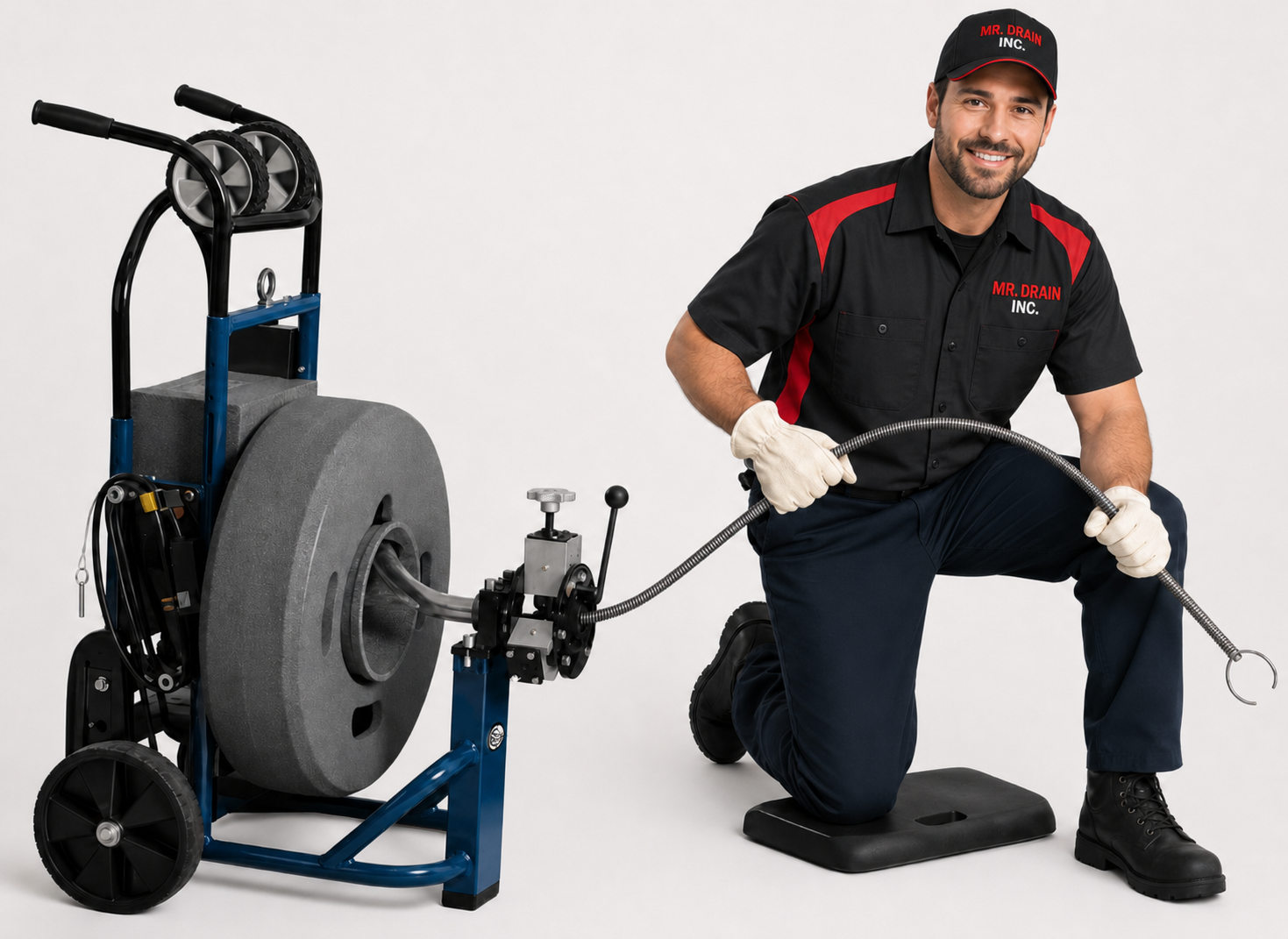
A drain machine spins a steel cable through the pipe. The cable head — a cutter, an auger, or a root blade — chews through the blockage. The drain industry has called this "rodding" for nearly a century. Most homeowners call it "snaking" because that's the word on the package at the hardware store. Same thing.
Rodding/snaking is the right tool for:
- Single-fixture clogs (sink, tub, toilet)
- Paper, wipes, and foreign objects
- Hair-and-soap mats in branch lines
- Emergency restoration of any flow at all
- Cutting tree roots out of a main line
- Initial clearing before a camera inspection
Hydro jetting — the high-pressure scour
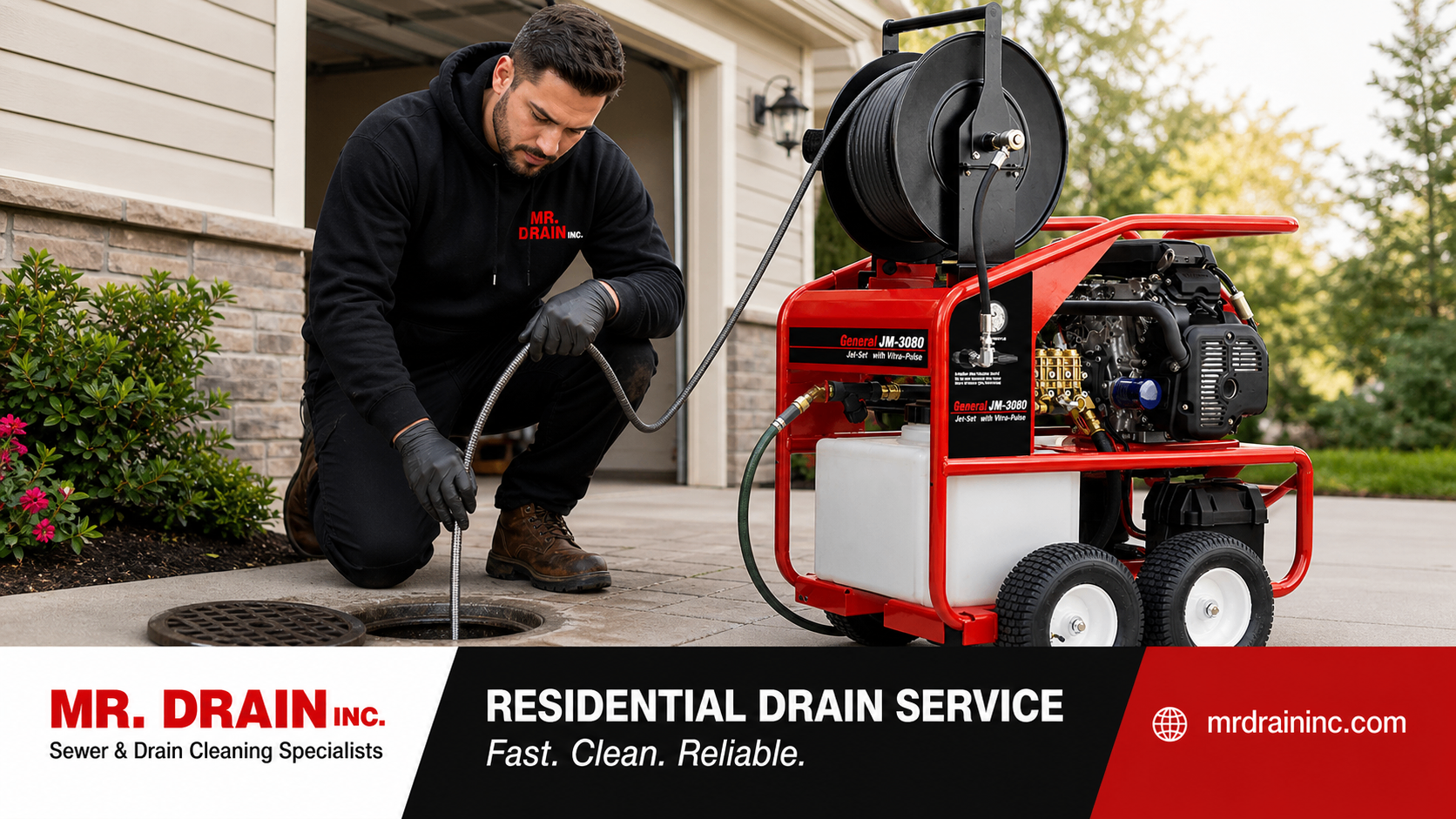
A truck-mounted pump pushes water at 4,000+ PSI through a specialty nozzle. The nozzle has a forward jet that pulls the hose into the pipe and rear jets that scour the pipe wall. Done right, a jetted line is restored to near-original-diameter clean — not just "flowing."
Hydro jetting is the right tool for:
- Grease lines — kitchens, restaurants, multi-unit buildings
- Mineral scale on the inside of cast iron pipe
- Soft root masses inside the lateral
- Recurring clogs that cabling clears for a few weeks at a time
- Any line being prepped for a long maintenance interval
Not sure which you need?
That's what we're here for. Free diagnosis, no upselling. Call Mr. Drain.
When you need both
The most expensive mistake we see is choosing only one. Heavy tree roots in a main line are the classic example: rod first to cut the roots and restore flow, then jet to remove the soft root mat from the pipe walls. Rod-only and the roots regrow fast; jet-only on a fully-blocked line and the jet can't get past the obstruction. The combination buys you years.
What each costs in Greater Boston
Approximate ranges, flat-priced in writing before any work begins:
- Single fixture cabling (rodding/snaking): $150–$275
- Branch line cleaning: $225–$425
- Main sewer line cabling: $325–$650
- Hydro jetting (residential main): $450–$900
- Camera inspection (standalone): $295–$495
- Pipe descaling + jet on cast iron: Quoted on site
How we pick
Three questions, every time:
- What's likely in the pipe? Grease, hair, roots, paper, scale.
- What's the pipe? Cast iron, clay, PVC, Orangeburg, ABS. Age and condition.
- Has this happened before? First time vs. third time this year.
Soft clog in PVC? Rod it, 30 minutes, done. Grease line in a restaurant? Hydro jet, set up a maintenance schedule. Scaled cast iron in a 1920s triple-decker? Descale mechanically, then jet, then camera-verify.
If a company offers only one tool, you're getting that tool whether it's right or not. Ask what they have on the truck before they show up.
Frequently Asked Questions
Is rodding the same as snaking?
What's the difference between rodding and hydro jetting?
Can rodding damage my pipes?
Which one lasts longer?
What if I have tree roots?
Stop guessing. Start fixing.
Mr. Drain is one call away — 24/7.
Family-owned since 1993. Free evaluations. Honest, upfront pricing across Boston, Greater Boston, the North Shore, and the South Shore.